



CYBERSECURITY · SHORT COURSE
Cybersecurity for ICT Auditors (NIST / ISO / COBIT + Audit Planning + Reporting).
ICT audits play a critical role in identifying cybersecurity risks, compliance gaps, and governance weaknesses. However, many ICT audits fail to detect real exposure due to:
 Ask on WhatsAppApplications are reviewed before a place is confirmed. We reply within 1 working day.
OVERVIEW
About this course.
ICT audits play a critical role in identifying cybersecurity risks, compliance gaps, and governance weaknesses. However, many ICT audits fail to detect real exposure due to:
- Weak audit scoping
- Poor risk prioritization
- Incomplete control mapping
- Insufficient technical understanding
- Evidence collection gaps
- Over-reliance on documentation instead of testing
- Weak audit reporting practices
Without structured methodology aligned to recognized frameworks, audits may:
- Miss high-risk vulnerabilities
- Provide limited assurance
- Produce generic recommendations
- Fail to support management decision-making
- Undermine governance credibility
There is therefore a strong need for a practical, framework-aligned course that equips ICT auditors with skills in control mapping, audit planning, testing techniques, evidence collection, and professional reporting aligned to leading standards such as NIST, ISO, and COBIT.
COURSE CONTENT
What the programme covers.
Day 1: Cybersecurity Governance Frameworks
01 Overview of Cybersecurity Frameworks
- NIST Cybersecurity Framework (Identify, Protect, Detect, Respond, Recover)
- ISO 27001 control domains
- COBIT governance principles
- Comparing frameworks
02 Risk-Based Auditing Concepts
- Risk assessment fundamentals
- Control objectives
- Inherent vs residual risk
- Audit maturity models
· Practical Session (Hands-On)
- Mapping sample controls to frameworks
- Risk prioritization exercise
Day 2: Audit Planning & Scoping
03 Audit Planning Methodology
- Defining audit scope
- Identifying critical assets
- Developing audit objectives
- Preparing audit programs
04 Control Mapping & Testing Design
- Control mapping matrices
- Identifying key controls
- Designing testing procedures
- Sampling strategies
· Practical Session (Hands-On)
- Drafting an ICT audit plan
- Preparing a control testing matrix
Day 3: Evidence Collection & Control Testing
05 Evidence Collection Techniques
- Documentation review
- Interviews and walkthroughs
- Configuration inspection
- Log review
06 Control Testing Methods
- Design effectiveness testing
- Operating effectiveness testing
- Technical validation basics
- Identifying control gaps
· Practical Session (Hands-On)
- Reviewing simulated audit evidence
- Identifying missing documentation and weaknesses
Day 4: Reporting & Professional Documentation
07 Writing Audit Findings
- Structuring findings (Condition, Criteria, Cause, Effect, Recommendation)
- Risk rating classification
- Clear and objective language
- Avoiding speculative conclusions
08 Communicating with Management
- Executive summaries
- Presenting audit results
- Handling management responses
- Follow-up and remediation tracking
· Practical Session (Hands-On Labs)
- Drafting a sample audit report
- Reviewing and improving report clarity
Day 5: Advanced Governance Integration & Capstone
09 Integrating Audit with Governance
- Continuous monitoring concepts
- Internal control frameworks
- Audit coordination with ICT and risk teams
- Compliance integration
10 Strengthening ICT Audit Maturity
- Audit metrics and KPIs
- Continuous improvement
- Building audit capacity
- Governance roadmap
· Capstone Practical Simulation
Participants will complete a full ICT audit simulation including
- Risk-based scoping
- Control mapping to NIST/ISO/COBIT
- Evidence review
- Gap identification
- Professional audit report drafting
- Executive briefing presentation
· Course Wrap-Up
- Practical evaluation
- Participant reflections
- Facilitator recommendations
- Certificate guidance
WHO IT'S FOR
Who should attend.
Target Group
This course is suitable for:
- ICT Auditors
- Internal Auditors
- Risk and Compliance Teams
- ICT Managers
- Governance and Assurance Staff
- IT Governance Officers
- Audit Committee Support Staff
Recommended Prerequisites
- Basic understanding of ICT systems
- Familiarity with audit principles
- No prior framework certification required
AFTER YOU APPLY
What happens next.
BEFORE YOU APPLY
Practical information.
- Venue
- Arusha, Tanzania
- Daily hours
- 8:30 AM – 4:30 PM
- Course fee
- TZS 1,300,000 · per participant
- Fee includes
- Course materials, lunch and refreshments
- VAT
- Fee excludes VAT
- Certificate
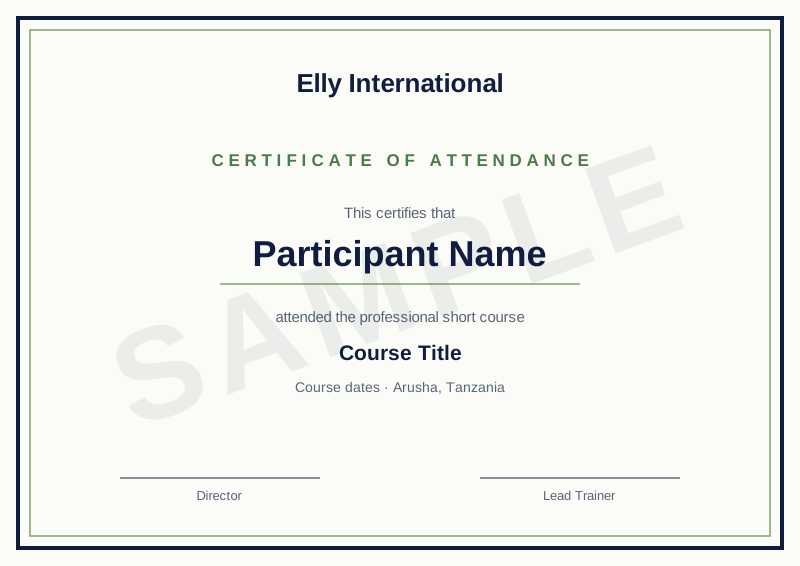
- Certificate of attendance
- Trainer
- Elly International training team
We send payment details only after your place is confirmed, and only from an @ellyinternational.co.tz email address. We will not ask you to pay into a personal account. If you are unsure, call us on +255 757 066 880 before paying.
More answers in our FAQ and booking and cancellation policy.