



AI & DIGITAL · SHORT COURSE
Generative AI for Public Finance: Policy, Budgeting and Fiscal Analysis.
This practical course equips public finance professionals, policymakers, budget officers, economists, and government managers with the knowledge and skills to use Generative AI to improve public financial management, policy development, budgeting, expenditure analysis, revenue planning, and fiscal decision-making. Participants will explore how AI tools can support the analysis of financial information, preparation of budget documents, development of policy briefs, scenario analysis, and generation of decision-support insights.
 Ask on WhatsAppApplications are reviewed before a place is confirmed. We reply within 1 working day.
OVERVIEW
About this course.
This practical course equips public finance professionals, policymakers, budget officers, economists, and government managers with the knowledge and skills to use Generative AI to improve public financial management, policy development, budgeting, expenditure analysis, revenue planning, and fiscal decision-making. Participants will explore how AI tools can support the analysis of financial information, preparation of budget documents, development of policy briefs, scenario analysis, and generation of decision-support insights.
The course also emphasizes responsible and secure use of AI in the public finance environment, including data protection, confidentiality, accuracy, human oversight, transparency, and accountability. Through practical exercises, public finance scenarios, case studies, and guided AI workflows, participants will develop practical approaches for integrating Generative AI into budgeting and fiscal analysis while maintaining professional and institutional standards.
COURSE CONTENT
What the programme covers.
01 Generative AI and Public Finance
- Introduction to Generative AI and Large Language Models
- Applications of AI in public financial management
- AI opportunities across finance and government functions
- AI-assisted financial research and information analysis
- Benefits, limitations, and risks of Generative AI
- Human judgment and oversight in AI-supported finance
02 AI for Public Policy Development and Analysis
- Using AI to research public policy issues
- Policy problem identification and analysis
- Generating policy options and alternatives
- Policy brief and position paper development
- Stakeholder and policy impact analysis
- Using AI to summarize legislation, policies, and regulations
- Validating AI-generated policy information
03 AI-Assisted Budget Preparation and Planning
- Generative AI in budget planning and preparation
- Budget narrative and justification development
- Analysis of budget priorities and allocations
- AI-assisted preparation of budget reports
- Revenue and expenditure forecasting support
- Budget scenario development
- Identifying inconsistencies and gaps in budget information
04 Fiscal Analysis and Economic Decision Support
- AI-assisted fiscal data analysis
- Revenue and expenditure analysis
- Fiscal trends and variance analysis
- Scenario and sensitivity analysis
- Fiscal impact assessment
- Debt and deficit analysis support
- Generating management insights from financial data
- Using AI to support evidence-based fiscal decisions
05 AI for Public Expenditure and Revenue Management
- Public expenditure analysis
- Programme and departmental spending analysis
- Revenue performance analysis
- Identifying expenditure patterns and anomalies
- Supporting resource allocation decisions
- AI-assisted financial performance reporting
- Improving efficiency and value-for-money analysis
06 AI for Financial Reporting and Management Information
- AI-assisted preparation of financial reports
- Executive summaries and management briefs
- Analysis of financial statements and reports
- Automated extraction and summarization of financial information
- Developing dashboards and decision-support narratives
- Generating questions and insights from financial data
- Quality assurance and verification of AI-generated outputs
07 Responsible AI, Data Protection and Public Finance Governance
- Responsible use of AI in government finance
- Confidentiality and protection of financial information
- Personal and sensitive data protection
- Cybersecurity risks associated with AI tools
- Accuracy, bias, hallucinations, and misinformation
- Transparency and explainability
- Human review and approval of AI-generated outputs
- AI governance, accountability, and audit considerations
· Practical Generative AI Workflows for Public Finance
- Developing effective prompts for finance professionals
- AI-assisted policy analysis exercise
- AI-assisted budget preparation exercise
- Fiscal scenario and sensitivity analysis
- Financial report summarization and briefing
- Developing an AI-supported public finance workflow
- Practical case studies and group exercises
- Development of an institutional AI application and action plan
WHO IT'S FOR
Who should attend.
This course is designed for:
- Public finance officers and managers
- Budget officers and budget analysts
- Economists and economic analysts
- Accountants and financial management officers
- Treasury and revenue officers
- Planning and policy officers
- Public sector managers and administrators
- Government auditors and internal auditors
- Procurement and expenditure management officers
- Monitoring, evaluation and performance officers
- Fiscal policy and public policy professionals
- Programme and project managers
- Senior government officials and decision-makers
- ICT, data and digital transformation professionals supporting public finance
- Professionals involved in financial reporting, planning and resource allocation
Suitable Sectors
The course is particularly relevant to ministries, government departments and agencies, local government authorities, public institutions, regulatory authorities, parastatals, universities and public education institutions, development organizations, donor-funded programmes, and other institutions involved in public financial management and fiscal policy.
AFTER YOU APPLY
What happens next.
BEFORE YOU APPLY
Practical information.
- Venue
- Arusha, Tanzania
- Daily hours
- 8:30 AM – 4:30 PM
- Course fee
- TZS 1,200,000 · per participant
- Fee includes
- Course materials, lunch and refreshments
- VAT
- Fee excludes VAT
- Certificate
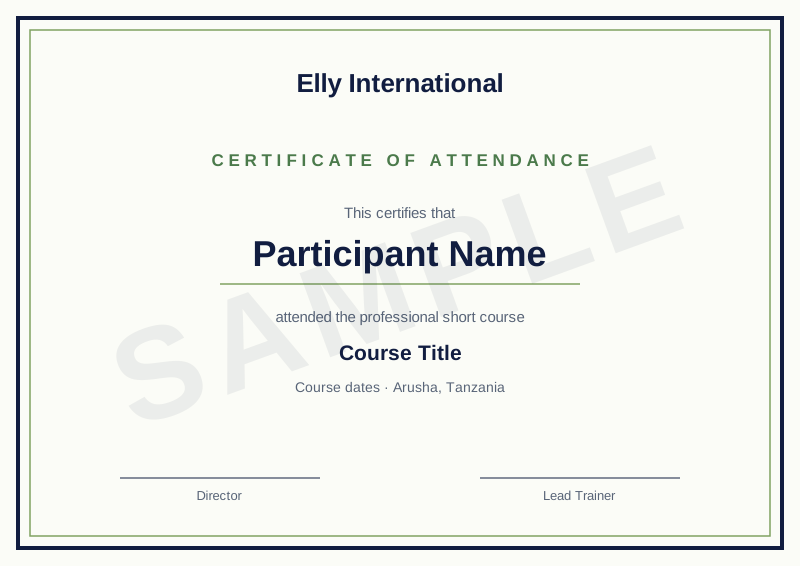
- Certificate of attendance
- Trainer
- Elly International training team
We send payment details only after your place is confirmed, and only from an @ellyinternational.co.tz email address. We will not ask you to pay into a personal account. If you are unsure, call us on +255 757 066 880 before paying.
More answers in our FAQ and booking and cancellation policy.