



LEADERSHIP & MANAGEMENT · SHORT COURSE
Practical Leadership and People Management: From Tasks to Team Performance.
This practical course equips managers, supervisors, team leaders, department heads, and emerging leaders with the knowledge and practical skills required to lead people effectively, manage workplace performance, build high-performing teams, and achieve organizational objectives.
 Ask on WhatsAppApplications are reviewed before a place is confirmed. We reply within 1 working day.
OVERVIEW
About this course.
This practical course equips managers, supervisors, team leaders, department heads, and emerging leaders with the knowledge and practical skills required to lead people effectively, manage workplace performance, build high-performing teams, and achieve organizational objectives.
The course focuses on the transition from simply assigning and supervising tasks to creating accountable, motivated, collaborative, and results-oriented teams. Participants will explore practical leadership approaches, communication, delegation, motivation, emotional intelligence, coaching, performance management, conflict resolution, team development, and employee engagement.
Through practical exercises, leadership scenarios, role plays, workplace case studies, and group activities, participants will develop practical skills for managing different personalities, handling difficult workplace situations, giving constructive feedback, setting expectations, delegating effectively, resolving conflicts, and building a culture of accountability and continuous improvement.
COURSE CONTENT
What the programme covers.
01 Foundations of Practical Leadership
- Understanding leadership and management
- Leadership versus management
- The role of an effective team leader
- Leadership responsibilities and expectations
- Different leadership styles and approaches
- Situational leadership
- Leading by example
- Leadership credibility and trust
- From task supervision to team leadership
- Common leadership challenges in the workplace
02 Self-Awareness and Emotional Intelligence
- Understanding emotional intelligence
- Self-awareness and leadership effectiveness
- Managing emotions under pressure
- Self-regulation and professional behaviour
- Empathy and understanding others
- Social awareness and interpersonal relationships
- Building positive workplace relationships
- Emotional intelligence in difficult situations
- Developing personal leadership strengths
- Practical emotional intelligence exercises
03 Building High-Performing Teams
- Understanding effective teams
- Characteristics of high-performing teams
- Team roles and responsibilities
- Establishing clear team objectives
- Building trust and psychological safety
- Team norms and workplace expectations
- Collaboration and teamwork
- Managing diverse personalities and working styles
- Building team accountability
- Developing a results-oriented team culture
04 Communication for Effective Leadership
- Principles of effective workplace communication
- Leadership communication styles
- Active listening and questioning techniques
- Giving clear instructions and expectations
- Effective meetings and team briefings
- Written and verbal communication
- Communicating organizational goals and priorities
- Managing communication barriers
- Giving and receiving feedback
- Communicating difficult messages professionally
05 Delegation, Accountability and Task Management
- Understanding effective delegation
- Delegation versus task allocation
- Selecting tasks and responsibilities to delegate
- Matching tasks to employee capabilities
- Setting clear expectations and deadlines
- Defining authority and accountability
- Monitoring delegated work without micromanaging
- Follow-up and progress tracking
- Managing workload and priorities
- Creating a culture of ownership and responsibility
06 Motivation, Engagement and Employee Performance
- Understanding employee motivation
- Intrinsic and extrinsic motivation
- Factors affecting workplace engagement
- Recognizing and appreciating employee contributions
- Building employee commitment
- Creating a supportive work environment
- Addressing low motivation and disengagement
- Linking individual performance to organizational objectives
- Recognition and reward approaches
- Practical employee engagement strategies
07 Coaching, Mentoring and Developing People
- Coaching versus mentoring
- Role of leaders in employee development
- Identifying employee strengths and development needs
- Effective coaching conversations
- Asking powerful coaching questions
- Giving constructive feedback
- Performance improvement conversations
- Developing individual development plans
- Knowledge sharing and succession development
- Creating a continuous learning culture
08 Performance Management and Results Orientation
- Understanding workplace performance management
- Setting clear performance expectations
- Aligning individual and team objectives
- Developing measurable performance indicators
- Monitoring team performance
- Conducting performance reviews
- Identifying performance gaps
- Addressing underperformance
- Developing performance improvement plans
- Linking performance to organizational results
- Continuous performance improvement
09 Conflict Management and Difficult Workplace Situations
- Understanding workplace conflict
- Common causes of team conflict
- Early identification of conflict
- Conflict management styles
- Managing disagreements between employees
- Handling difficult conversations
- Dealing with difficult behaviours
- Mediation and collaborative problem-solving
- Managing workplace complaints
- Maintaining professionalism during conflict
- Turning conflict into constructive outcomes
10 Decision-Making, Problem-Solving and Leadership Under Pressure
- Leadership decision-making principles
- Structured problem-solving approaches
- Identifying root causes
- Evidence-based decision-making
- Managing uncertainty and competing priorities
- Risk awareness and decision-making
- Delegating decision-making appropriately
- Handling pressure and urgent situations
- Learning from mistakes and failures
- Developing practical action-oriented solutions
11 Leading Change and Building a Performance Culture
- Understanding organizational change
- The role of leaders in change management
- Communicating change effectively
- Managing resistance to change
- Engaging employees during organizational change
- Building adaptability and resilience
- Creating a culture of accountability
- Encouraging innovation and continuous improvement
- Sustaining high team performance
- Measuring and reinforcing organizational performance
· Practical Leadership and Team Performance Project
- Leadership self-assessment
- Identifying team performance challenges
- Developing team objectives and expectations
- Delegation and accountability exercise
- Conducting a coaching conversation
- Giving constructive performance feedback
- Conflict-resolution role play
- Developing a team performance improvement plan
- Creating a practical employee engagement strategy
- Developing an individual leadership action plan
- Group case studies and leadership simulations
WHO IT'S FOR
Who should attend.
This course is designed for:
- Senior managers and executives
- Department heads and managers
- Team leaders and supervisors
- Project and programme managers
- Human resource managers and officers
- Operations managers
- Administrative managers
- Finance and procurement managers
- ICT and technology managers
- Sales and marketing managers
- Customer service managers
- Public-sector managers and supervisors
- NGO and development-sector managers
- Emerging and aspiring leaders
- Professionals transitioning into management roles
- Anyone responsible for supervising, developing, or managing employees
Suitable Sectors
The course is particularly relevant to government ministries, departments and agencies, local government authorities, public institutions, private companies, banks and financial institutions, NGOs and development organizations, universities and educational institutions, healthcare organizations, manufacturing companies, telecommunications companies, tourism and hospitality organizations, professional service firms, and other organizations seeking to strengthen leadership, employee performance, teamwork, accountability, and organizational results.
AFTER YOU APPLY
What happens next.
BEFORE YOU APPLY
Practical information.
- Venue
- Arusha, Tanzania
- Daily hours
- 8:30 AM – 4:30 PM
- Course fee
- TZS 1,300,000 · per participant
- Fee includes
- Course materials, lunch and refreshments
- VAT
- Fee excludes VAT
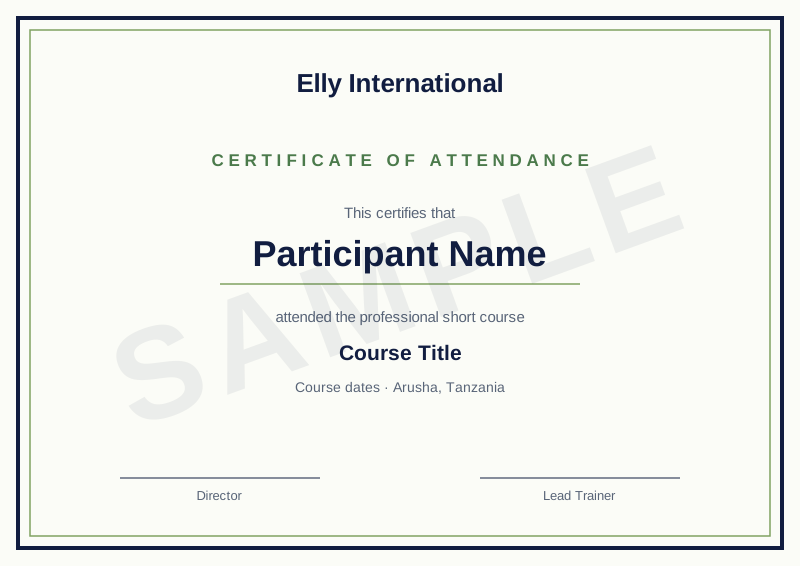
- Certificate
- Certificate of attendance
- Trainer
- Elly International training team
We send payment details only after your place is confirmed, and only from an @ellyinternational.co.tz email address. We will not ask you to pay into a personal account. If you are unsure, call us on +255 757 066 880 before paying.
More answers in our FAQ and booking and cancellation policy.