



LEADERSHIP & MANAGEMENT · SHORT COURSE
Strategic Performance Management: KPIs, Scorecards and Results Reporting.
This practical course equips managers, supervisors, performance officers, planners, monitoring and evaluation professionals, and organizational leaders with the knowledge and skills required to develop, implement, monitor, and report strategic organizational performance. Participants will learn how to translate organizational strategies and objectives into measurable Key Performance Indicators (KPIs), performance targets, scorecards, and results-based reporting frameworks.
 Ask on WhatsAppApplications are reviewed before a place is confirmed. We reply within 1 working day.
OVERVIEW
About this course.
This practical course equips managers, supervisors, performance officers, planners, monitoring and evaluation professionals, and organizational leaders with the knowledge and skills required to develop, implement, monitor, and report strategic organizational performance. Participants will learn how to translate organizational strategies and objectives into measurable Key Performance Indicators (KPIs), performance targets, scorecards, and results-based reporting frameworks.
The course focuses on practical approaches to performance planning, KPI development, performance measurement, data collection, target setting, performance analysis, balanced scorecards, management dashboards, and results reporting. Participants will also explore how performance information can support evidence-based decision-making, resource allocation, accountability, continuous improvement, and achievement of strategic objectives.
Through practical exercises, organizational case studies, group assignments, and workplace-based scenarios, participants will develop practical performance management tools, including KPI frameworks, balanced scorecards, performance dashboards, monitoring templates, and management performance reports.
COURSE CONTENT
What the programme covers.
01 Fundamentals of Strategic Performance Management
- Introduction to strategic performance management
- Linking organizational strategy to performance
- Strategic objectives and organizational results
- Performance management versus performance measurement
- Results-based management principles
- Performance management cycles
- Organizational accountability and performance culture
- Roles and responsibilities in performance management
- Common challenges in strategic performance management
02 Strategic Planning and Results Frameworks
- Translating strategic plans into measurable results
- Strategic goals, objectives and initiatives
- Inputs, activities, outputs, outcomes and impacts
- Results chains and logic models
- Developing results frameworks
- Linking departmental plans to organizational strategy
- Aligning individual, departmental and organizational performance
- Developing performance implementation plans
- Establishing strategic priorities
03 Developing Effective KPIs
- Introduction to Key Performance Indicators
- Characteristics of effective KPIs
- Leading and lagging indicators
- Quantitative and qualitative indicators
- Input, process, output, outcome and impact indicators
- Developing SMART performance indicators
- KPI selection and prioritization
- KPI definitions, formulas and data sources
- Establishing KPI owners and reporting responsibilities
- Avoiding poorly designed or misleading KPIs
- Practical KPI development exercises
04 Performance Targets, Baselines and Measurement
- Understanding performance baselines
- Setting realistic and challenging performance targets
- Target-setting methodologies
- Annual, quarterly and monthly targets
- Benchmarking and comparative performance
- Thresholds and performance standards
- Measuring actual performance against targets
- Performance gaps and variance analysis
- Corrective actions and performance improvement
- Reviewing and updating performance targets
05 Balanced Scorecard and Strategic Scorecards
- Introduction to the Balanced Scorecard
- Four perspectives of the Balanced Scorecard
- Financial perspective
- Customer/stakeholder perspective
- Internal business process perspective
- Learning and growth perspective
- Developing strategic objectives for each perspective
- KPI selection for scorecards
- Strategy maps and cause-and-effect relationships
- Developing organizational and departmental scorecards
- Practical Balanced Scorecard development
06 Performance Monitoring and Data Management
- Performance monitoring frameworks
- Performance data requirements
- Data sources and collection methods
- Establishing data collection responsibilities
- Data quality, accuracy and completeness
- Data validation and verification
- Performance monitoring schedules
- Managing performance evidence
- Identifying data gaps and inconsistencies
- Performance information management
- Using digital tools for performance monitoring
07 Performance Analysis and Management Dashboards
- Introduction to performance analysis
- Comparing actual results against targets
- Variance and trend analysis
- Identifying performance gaps
- Root-cause analysis
- Performance trends and patterns
- Developing performance dashboards
- Traffic-light performance reporting
- Visualizing KPIs and organizational results
- Management dashboards for decision-making
- Using performance data to identify improvement priorities
08 Results-Based Reporting and Performance Communication
- Principles of results-based reporting
- Structure of effective performance reports
- Reporting achievements against strategic objectives
- KPI and target performance reporting
- Reporting outputs, outcomes and impacts
- Explaining performance variances
- Reporting challenges and corrective actions
- Executive summaries and management briefs
- Presenting performance information to stakeholders
- Evidence-based performance narratives
- Developing quarterly and annual performance reports
09 Performance Reviews, Accountability and Continuous Improvement
- Conducting performance review meetings
- Reviewing departmental and organizational performance
- Identifying underperformance and performance risks
- Root-cause analysis and problem-solving
- Developing performance improvement plans
- Assigning corrective actions and responsibilities
- Monitoring implementation of improvement actions
- Accountability and performance ownership
- Learning from performance results
- Continuous improvement and organizational learning
10 Digital Tools and AI for Performance Management
- Digital transformation of performance management
- Using Excel for KPI tracking and analysis
- Developing automated performance dashboards
- Introduction to Business Intelligence tools
- Data visualization for management reporting
- AI-assisted performance analysis
- Using Generative AI to summarize performance data
- AI-assisted development of performance reports
- Generating management insights from performance information
- Data confidentiality and responsible use of AI
- Human validation of AI-generated performance outputs
· Practical Strategic Performance Management Project
- Developing organizational strategic objectives
- Translating strategic objectives into KPIs
- Developing KPI definitions and measurement formulas
- Establishing baselines and performance targets
- Developing a Balanced Scorecard
- Creating a performance monitoring framework
- Designing a KPI performance dashboard
- Conducting performance and variance analysis
- Preparing a results-based performance report
- Developing a performance improvement action plan
- Group presentations and workplace-based case studies
WHO IT'S FOR
Who should attend.
Who Is It For?
This course is designed for:
- Senior managers and executives
- Strategic planning officers
- Performance management officers
- Monitoring and evaluation (M&E) professionals
- Planning and policy officers
- Programme and project managers
- Departmental and unit heads
- Human resource and performance management officers
- Business performance analysts
- Management information officers
- Quality assurance and quality management professionals
- Finance and budget officers
- Operations managers and supervisors
- Government and public-sector managers
- NGO and development programme managers
- Corporate performance and strategy professionals
- Professionals responsible for organizational reporting and accountability
Suitable Sectors
The course is particularly relevant to government ministries, departments and agencies, local government authorities, public institutions, regulatory authorities, parastatals, universities and educational institutions, NGOs, development organizations, banks and financial institutions, private companies, healthcare organizations, manufacturing companies, telecommunications organizations, tourism and hospitality businesses, and other organizations that use strategic plans, KPIs, performance targets and results-based reporting systems.
AFTER YOU APPLY
What happens next.
BEFORE YOU APPLY
Practical information.
- Venue
- Arusha, Tanzania
- Daily hours
- 8:30 AM – 4:30 PM
- Course fee
- TZS 1,200,000 · per participant
- Fee includes
- Course materials, lunch and refreshments
- VAT
- Fee excludes VAT
- Certificate
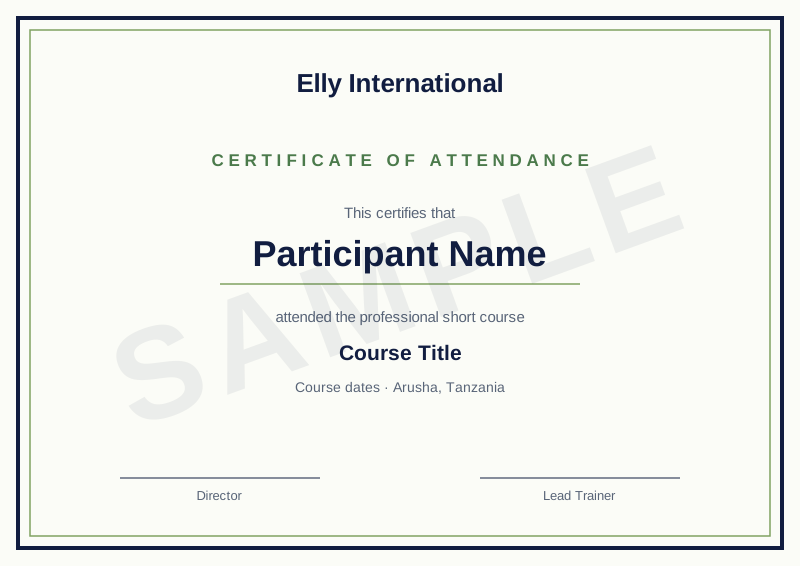
- Certificate of attendance
- Trainer
- Elly International training team
We send payment details only after your place is confirmed, and only from an @ellyinternational.co.tz email address. We will not ask you to pay into a personal account. If you are unsure, call us on +255 757 066 880 before paying.
More answers in our FAQ and booking and cancellation policy.