



LEADERSHIP & MANAGEMENT · SHORT COURSE
Training of Trainers: Facilitation, Engagement and Learning Assessment.
This practical Training of Trainers (ToT) course equips trainers, facilitators, instructors, lecturers, teachers, learning and development professionals, and subject-matter experts with the knowledge and practical skills required to design, deliver, facilitate, and evaluate effective learning programmes for adult learners.
 Ask on WhatsAppApplications are reviewed before a place is confirmed. We reply within 1 working day.
OVERVIEW
About this course.
This practical Training of Trainers (ToT) course equips trainers, facilitators, instructors, lecturers, teachers, learning and development professionals, and subject-matter experts with the knowledge and practical skills required to design, deliver, facilitate, and evaluate effective learning programmes for adult learners.
The course focuses on moving beyond traditional presentation-based training toward interactive, learner-centred, practical, and results-oriented facilitation. Participants will explore adult learning principles, training needs assessment, session planning, instructional techniques, presentation skills, learner engagement, questioning, group facilitation, practical demonstrations, and management of different learning styles and participant behaviours.
The course also emphasizes effective learning assessment, including the design of quizzes, practical exercises, assignments, observation checklists, feedback mechanisms, and competency-based assessments. Through demonstrations, micro-teaching sessions, role plays, peer feedback, case studies, and practical assignments, participants will develop the confidence and competence to deliver engaging training and measure whether learning objectives have been achieved.
COURSE CONTENT
What the programme covers.
01 Foundations of Effective Training and Facilitation
- Understanding the role of a professional trainer
- Trainer versus facilitator
- Principles of effective facilitation
- Characteristics of an effective trainer
- Trainer competencies and professional conduct
- Learner-centred versus trainer-centred approaches
- Creating a positive learning environment
- Training ethics and professional responsibility
- Common challenges faced by trainers
- Transitioning from presenting information to facilitating learning
02 Adult Learning Principles and Learning Styles
- Understanding adult learners
- Principles of adult learning
- Motivation and learner participation
- Connecting learning to workplace experience
- Prior knowledge and learner expectations
- Different learning preferences
- Experiential and collaborative learning
- Inclusive learning environments
- Supporting different levels of learner ability
- Applying adult learning principles in training sessions
03 Training Needs Assessment and Learning Objectives
- Understanding training needs assessment
- Identifying knowledge, skills and competency gaps
- Organizational and individual training needs
- Conducting learner and stakeholder analysis
- Defining training goals
- Developing SMART learning objectives
- Knowledge, skills and attitudes
- Competency-based learning objectives
- Aligning objectives with training content
- Linking learning objectives to assessment methods
04 Training Design and Session Planning
- Principles of instructional design
- Developing a training programme
- Structuring a training session
- Developing session plans
- Selecting and organizing learning content
- Developing training agendas
- Time management during training
- Selecting appropriate learning methods
- Designing practical activities
- Preparing trainer guides and participant materials
- Aligning content, activities and learning outcomes
05 Facilitation and Presentation Skills
- Effective presentation techniques
- Verbal and non-verbal communication
- Voice projection, pace and tone
- Effective use of body language
- Storytelling and examples in training
- Explaining complex concepts clearly
- Asking effective questions
- Active listening
- Managing trainer confidence and presentation anxiety
- Effective use of visual aids
- Handling questions and difficult participants
06 Learner Engagement and Interactive Training Methods
- Importance of learner engagement
- Interactive versus lecture-based learning
- Group discussions
- Brainstorming
- Case studies
- Role plays and simulations
- Problem-solving activities
- Demonstrations and practical exercises
- Peer learning and collaborative activities
- Games and experiential learning
- Energizers and attention-management techniques
- Maintaining participant involvement throughout a session
07 Managing Training Rooms and Participant Behaviour
- Creating an inclusive learning environment
- Managing different participant personalities
- Handling dominant and disruptive participants
- Encouraging quiet participants
- Managing disagreements and challenging questions
- Dealing with resistance to learning
- Managing group dynamics
- Handling conflicts during training
- Maintaining discipline while remaining supportive
- Managing time and participation
- Facilitating diverse and multicultural groups
08 Digital Learning and Technology-Enhanced Training
- Introduction to technology-supported learning
- Using PowerPoint and multimedia effectively
- Online and virtual training principles
- Video conferencing and virtual classrooms
- Digital collaboration and engagement tools
- Online polls, quizzes and interactive activities
- Learning Management Systems (LMS)
- Developing digital learning materials
- Hybrid and blended learning
- Maintaining engagement in virtual training
- Responsible use of Generative AI in training development
09 Learning Assessment and Competency Measurement
- Principles of learning assessment
- Formative and summative assessment
- Diagnostic assessment
- Knowledge-based assessment
- Skills and competency assessment
- Designing effective multiple-choice questions
- Short-answer and scenario-based questions
- Practical demonstrations and performance assessment
- Observation checklists and assessment rubrics
- Pre-training and post-training assessments
- Measuring achievement of learning objectives
- Avoiding common assessment errors
10 Feedback, Evaluation and Training Effectiveness
- Importance of learner feedback
- Providing constructive feedback
- Receiving and responding to feedback
- Peer assessment and self-assessment
- Evaluating participant satisfaction
- Measuring learning outcomes
- Evaluating behavioural and workplace application
- Training effectiveness indicators
- Kirkpatrick's training evaluation framework
- Developing post-training evaluation tools
- Using evaluation results to improve future training
· Practical Micro-Teaching and Trainer Development
- Preparing a short training session
- Developing learning objectives
- Preparing training materials
- Delivering a micro-teaching session
- Applying interactive facilitation techniques
- Managing questions and participant interaction
- Conducting practical learning activities
- Assessing participant learning
- Receiving peer and facilitator feedback
- Identifying individual trainer strengths and development areas
- Developing a personal trainer improvement plan
· Practical Training Programme Development
- Conducting a training needs analysis
- Developing a complete training programme
- Preparing a course outline and session plan
- Developing learning materials
- Designing participant activities
- Developing pre- and post-training assessments
- Preparing facilitator notes and trainer guides
- Delivering an interactive training session
- Conducting learner evaluation
- Analysing training results
- Preparing a training improvement report
- Final trainer presentation and peer assessment
WHO IT'S FOR
Who should attend.
This course is designed for:
- Professional trainers and facilitators
- Training and development officers
- Learning and development professionals
- Lecturers and academic staff
- Teachers and instructors
- Human resource professionals
- Corporate trainers
- Government training officers
- NGO and development-sector trainers
- Technical and vocational instructors
- Subject-matter experts who conduct training
- Consultants and professional facilitators
- Programme and project officers
- Managers and supervisors responsible for staff development
- ICT trainers and technology instructors
- Professionals transitioning into training and facilitation roles
Suitable Sectors
The course is particularly relevant to government ministries, departments and agencies, local government authorities, universities and educational institutions, vocational and technical training institutions, corporate organizations, NGOs and development organizations, banks and financial institutions, healthcare institutions, professional training centres, consulting firms, public institutions, and organizations responsible for employee learning, capacity building and professional development.
AFTER YOU APPLY
What happens next.
BEFORE YOU APPLY
Practical information.
- Venue
- Arusha, Tanzania
- Daily hours
- 8:30 AM – 4:30 PM
- Course fee
- TZS 1,200,000 · per participant
- Fee includes
- Course materials, lunch and refreshments
- VAT
- Fee excludes VAT
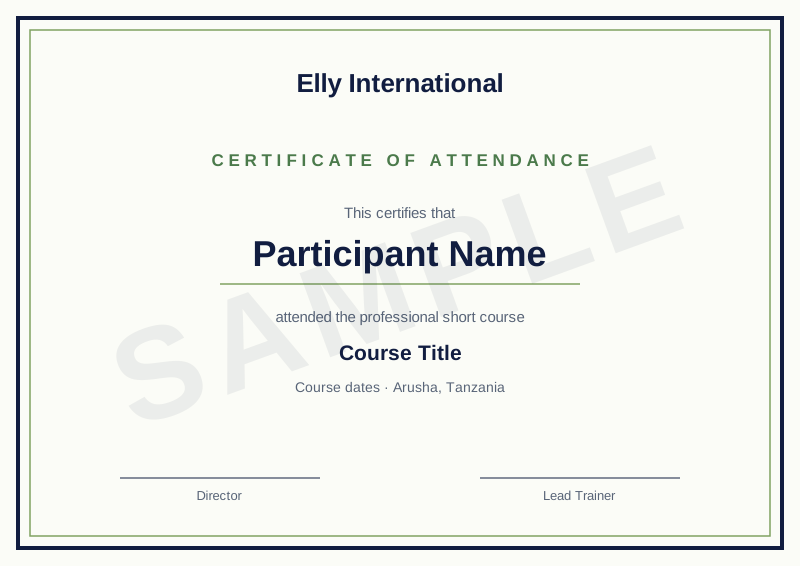
- Certificate
- Certificate of attendance
- Trainer
- Elly International training team
We send payment details only after your place is confirmed, and only from an @ellyinternational.co.tz email address. We will not ask you to pay into a personal account. If you are unsure, call us on +255 757 066 880 before paying.
More answers in our FAQ and booking and cancellation policy.